Let me start by painting a portrait. You’re tired, even after getting 7-9 hours of sleep. Despite diet and exercise, you’re gaining weight more easily than before. You’re less tolerant to the cold; especially your fingers and toes. You go to see your doctor and they run the standard TSH and Total T4 blood test. When the results come in, they are within the reference range. As such, you continue to struggle with your symptoms. In essence, the lack of appropriate testing has failed you. Here’s how to empower yourself to receive accurate thyroid testing.
Understanding Reference Range
A reference range is a set of values for a specific test. This range indicates what those results should be for the majority of a healthy population. However, a reference range can include levels linked to disease.
More important than the reference range is an optimal range. An optimal range is a narrower range, determined through research and used in functional and integrative practices. Optimal ranges identify and address potential health issues before they progress. They allow for best health outcomes, decreasing disease risks, and improving longevity.
Accurate Thyroid Tests
Here’s a list of markers I request, along with what they measure.
- Thyroid Stimulating Hormone (TSH) is the standard marker to assess thyroid function. TSH essentially tells your thyroid gland how much thyroid hormone it needs to make.
- Total Thyroxine (Total T4) measures both bound and unbound thyroxine. This is not reflective of the activity of T4 when measured alone.
- Free Thyroxine (Free T4 or fT4) measures the amount of active T4 hormone circulating in the blood, unbound to proteins. This marker identifies how well your gland is working to regulate metabolism. High or low levels indicate hyperthyroidism or hypothyroidism, respectively.
- Triiodothyronine (Free T3 or fT3) is the active, unbound form ready and available for cells to use. High and low levels also reflect hyperthyroidism, hypothyroidism, and pituitary disorders.
- Resin T3 Uptake (T3U) is often scoffed at in western medicine as an outdated test. It’s utility is to understand how well the hormone is binding at receptor sites. Thyroid hormone binds on to proteins, such as thyroid binding globulin (TBG). Unfortunately, TBG is not a steady or reliable marker. T3 Uptake measures the number of sites for active unbound T3 to bind on these thyroxine-binding proteins. The number of binding sites, whether high or low, impact T4, T3, and T3U levels.
- Reverse T3 (rT3) production takes place in cases of extreme stress; trauma, surgery, chronic stress, or active infections. High levels may reflect high cortisol levels, in addition to the inability to clear rT3.
Antibody Testing
Thyroid Antibodies reflect the immune system attacking the tissues of the thyroid gland. In the absence of testing, you may not know you have autoimmunity because your TSH is normal. This is because the antibodies attach to the receptor sites but do not cause a response. In other cases, the binding can cause over-activation of the thyroid gland. These are the three thyroid antibody tests:
- Thyroid Peroxidase Antibodies (TPO Ab) is the most common antibody in autoimmune thyroid that is high. This can suggest either Hashimoto’s or Graves’ disease.
- Thyroglobulin Antibodies (Tg Ab) may not be elevated with autoimmune thyroid disease like TPO Ab. It is typically ordered with thyroid cancer treatment or when lab results aren’t making sense. This is because antibodies can interfere with thyroid hormone production.
- Thyroid Stimulating Hormone Receptor Antibody (TSH-R Ab) is ordered in patients with hyperthyroidism. A result suggests Graves’ disease.
The Problems with Your Testing
The doctor ordered the standard TSH and Total T4 tests. Your results show they both are within the reference range; but this doesn’t mean that you are in the right range. You’re not; you’re symptomatic.
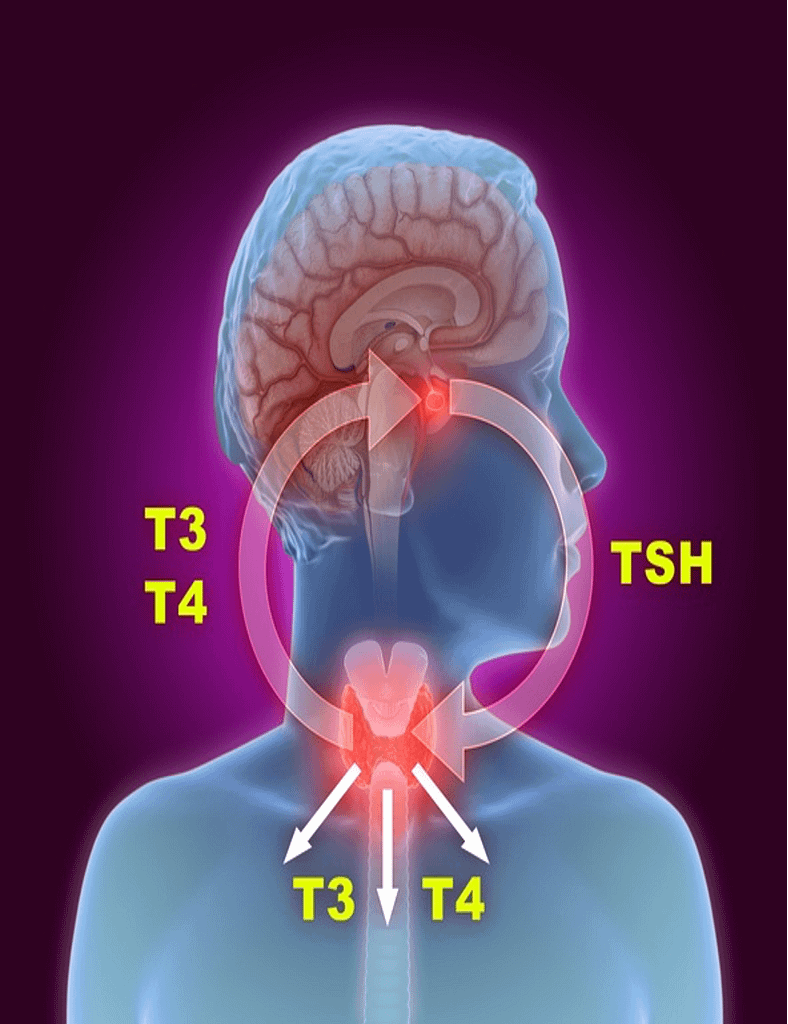
Each lab (LabCorp, Sunrise, Quest Diagnostics) has their own reference range. Generally, the standard reference range for TSH is 0.450 – 4.500 uIU/mL, and the range for T4 is 4.5 – 12.0 µg/dL. So long as you fall within these ranges, your doctor will say you are ok.
The lower your TSH, the more active your thyroid is. For example: a TSH of .60, while within the reference range, would suggest it’s overproducing hormones. The higher your TSH, the less active your thyroid is. For example, a TSH of 3.5, again in the reference range, would suggest your thyroid is struggling to produce hormones.
TSH and T4 alone do not tell you if your thyroid actually producing, binding, and utilizing thyroid hormones. Are you properly converting T4 to T3? Remember, T3 is what binds to cell receptors and is active. Do you have enough vitamin A to bind at the receptor cites? Is there autoimmunity? Case in point, you can have optimal TSH and T4 ranges but still test positive for TPO. In this case, you have autoimmunity with a functional thyroid gland. What if you have a pituitary issue? If TSH and T4 are low, is it the thyroid or is it the pituitary gland?
Knowledge is Power
It is not enough to simply test TSH and T4, yet this is the standard practice. Advocating for accurate thyroid testing requires knowing what labs to run and why.
Your thyroid gland is the master regulator of metabolism, energy, temperature, heart rate, growth, organ and brain function. Every single cell in your body has a receptor site for thyroid hormone binding. Thyroid dysfunction increases risks for other complications. For example, heart disease, osteoporosis, depression, anxiety, pregnancy complications and infertility, and metabolic issues.
If you are struggling with symptoms or need help understanding your labs, learn more about how I can help you.