
My Story: From Feeling Broken to Feeling Like Myself Again
For much of my life, I have been trying to understand my own health.
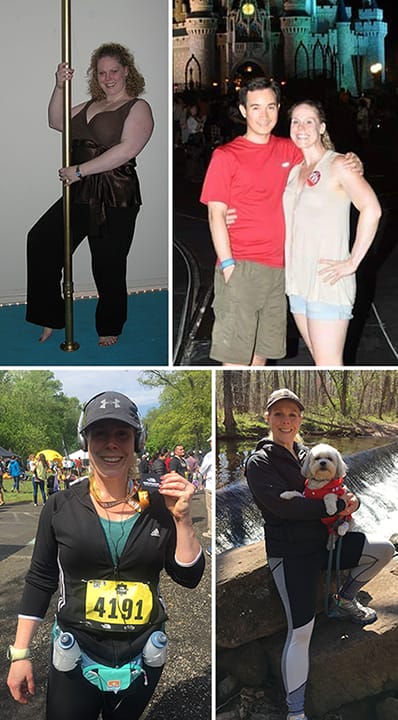
My journey began when I was just four years old, when I was diagnosed with Henoch-Schönlein Purpura (HSP), now known as IgA Vasculitis—a condition that affects the small blood vessels. That was my first experience with an immune system that wasn’t functioning the way it should.
As I grew up, there were chronic ear infections, sore throats, respiratory infections, seasonal allergies, antibiotics, allergy shots, and eventually surgery to remove a gallbladder that had essentially stopped functioning.
But I didn’t yet understand how all of these pieces might connect.
In my 20s, life became increasingly stressful, and I turned to food for comfort. My weight reached 210 pounds, I was diagnosed with obesity, and my triglycerides were elevated. I was exercising, trying to manage my weight, and doing what I thought I was supposed to do—but I still didn’t feel well.
In my 30s, I decided it was time to change. I lost 80 pounds, but instead of feeling better, I began experiencing fatigue, low mood, hair loss, brittle nails, and frustrating fluctuations in my weight despite eating well and exercising.
That’s when I was diagnosed with Hashimoto’s thyroiditis.
Suddenly, some of the pieces started to come together.
I began paying much closer attention to the connection between what I ate and how I felt. Through my own nutrition journey, I discovered that certain foods were contributing to symptoms I had accepted as “normal.” When I removed gluten and dairy, my bloating, reflux, and indigestion improved dramatically. My bowel movements became more regular. My seasonal allergies improved, and the chronic ear infections and hives that had been part of my life for years disappeared.
For the first time, I began to understand that food wasn’t simply food. It could be information for my body.
But I still had a lot to learn.
For years, I believed that if I wanted to lose weight, I needed to eat less and exercise more. I spent countless hours in the gym, sometimes completing back-to-back classes, constantly focused on calories, the scale, my clothing size, inches, and how much weight I could lift.
I was smaller than I had ever been. But I wasn’t healthier. And I certainly wasn’t happier. My relationship with my body had become unhealthy, and I eventually realized that I had been working against my body rather than learning how to work with it.
Then came another chapter.
In my late 30s, I was diagnosed with Chronic Inflammatory Response Syndrome following mold exposure. I experienced brain fog, memory problems, fatigue, mood changes, and the overwhelming feeling that my brain simply wasn’t functioning the way it used to.
And then, as if my body hadn’t already given me enough to figure out, I entered perimenopause.
Night sweats. Sleepless nights. Low libido. Changes in mood. Cystic acne. Exhaustion. Weight gain.
I remember feeling like I was no longer myself. I felt frustrated in my own body and, at times, inadequate in my marriage. I wondered why the strategies that had worked for me in the past suddenly weren’t working anymore.
Welcome to perimenopause.
My experience with hormone therapy taught me another important lesson: there is no one-size-fits-all answer.
What helped one symptom created another challenge for me. I experienced significant weight gain in a short period of time, particularly around my abdomen and thighs, and once again found myself struggling with my body image and wondering what I was doing wrong.
But this time, I approached the problem differently.
Instead of asking, “How can I force my body to change?” I started asking, “What does my body need from me now?”
That question changed everything.
I began focusing on evidence-based nutrition for women going through perimenopause, adequate nourishment, strength training, recovery, sleep, stress management, and the unique metabolic and hormonal changes that occur during the menopause transition.
I stopped overtraining. I stopped under-eating. I stopped believing that more exercise and fewer calories were always the answer. I started building muscle, prioritizing recovery, and giving my body the fuel it needed.
And slowly, things began to change.
Today, I’m in my late-40s and navigating my own menopause transition with a completely different perspective. I’m sleeping through the night. My energy has improved. My 3am wake up calls and night sweats are gone. I sleep through the night and wake up feeling rested. I feel stronger. I feel clearer. And most importantly, I feel like myself again.
My health journey has also given me an appreciation for just how interconnected the body is. Nutrition, metabolism, hormones, digestion, immune function, stress, sleep, movement, medications, genetics, and emotional well-being don’t exist in separate boxes.
They influence one another.
That’s why I don’t believe in handing someone a generic meal plan and sending them on their way.
As a Board Certified Nutrition Specialist (CNS), Licensed Dietitian Nutritionist (LDN), and National Board Certified Health & Wellness Coach (NBC-HWC), I combine medical nutrition therapy, evidence-based nutrition, functional nutrition testing when appropriate, and lifestyle strategies to create a plan around you.
But my personal experience brings something else to my work.
I know what it feels like to be the patient.
I know what it’s like to look at your labs and wonder what they mean.
I know what it’s like to do everything you’re told to do and still not feel better.
I know what it’s like to wake up exhausted, struggle with brain fog, gain weight despite your best efforts, lose confidence in your body, and wonder if this is simply your new normal.
And I know what it feels like to finally begin putting the pieces together.
That’s why I don’t expect perfection from my clients.
I believe in progress.
One small change. One better meal. One restful night. One strength-training session. One decision to stop fighting your body and start listening to it.
You don’t have to take a giant leap to transform your health.
You just need to take the next right step.
My goal is to help you stop guessing, understand what your body needs, and start feeling like yourself again—with a clear nutrition strategy designed to improve your metabolism, cholesterol, energy, and confidence.
Because I’ve been on this journey, too.
And I know there is a way forward.
About Debra J. McGinley, MSHS, MA, CNS, LDN,
NBC-HWC
I believe your health is more than a number on a scale or a single lab result. My approach combines medical nutrition therapy, nutritional biochemistry, functional nutrition, and health coaching to help uncover the factors contributing to your symptoms and create practical strategies that work in real life.
I am a Certified Nutrition Specialist (CNS), Licensed Dietitian-Nutritionist (LDN) in Maryland and Washington, DC, and National Board Certified Health & Wellness Coach (NBC-HWC). This combination of clinical nutrition and behavior-change expertise allows me to look at both sides of the equation: what your body needs and how to realistically make those changes part of your life.
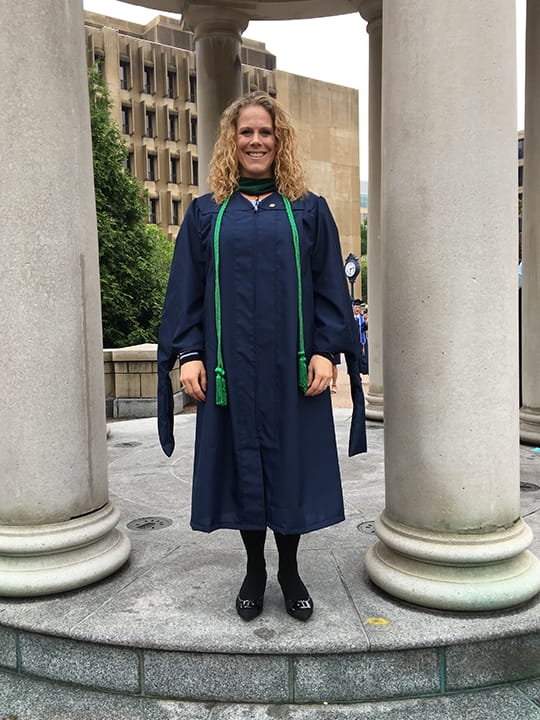
I earned my Master’s in Health and Wellness Coaching from Maryland University of Integrative Health in 2016, followed by a Master of Science in Health Sciences in Integrative Medicine from The George Washington University in 2018. My graduate education included advanced study in endocrinology, cardiovascular health, neurology, gastroenterology, and environmental health. I was nominated for the Outstanding Student Award and inducted into the Alpha Eta Honor Society.
In 2019, I earned my national board certification in health and wellness coaching. In 2023, I became a Certified Nutrition Specialist, completing more than 1,000 hours of supervised clinical experience and demonstrating advanced competency in nutrition science and clinical practice.
My passion for nutrition and integrative health extends into education. I serve as adjunct faculty at The George Washington University, where I have also developed undergraduate and graduate curriculum. I have previously taught at Bauman College and Northern Virginia Community College and contributed to curriculum development for the Nutritional Therapy Association’s Health Coaching program.
Throughout my career, I’ve worked with individuals navigating metabolic dysfunction, inflammatory conditions, hormone-related concerns, digestive health, and chronic disease risk, as well as active and reserve service members seeking support with nutrition, physical activity, stress management, and overall performance.
Today, my clinical focus is especially centered on helping women navigate the perimenopause and menopause transition. I help clients understand how changes in hormones, metabolism, nutrition, sleep, stress, movement, and other lifestyle factors can influence how they feel—and more importantly, what they can do about it.
My areas of clinical interest also include metabolic health, gastrointestinal health, brain health, autoimmune conditions—including Hashimoto’s thyroiditis—and chronic disease prevention.
Whether you’re struggling with symptoms you can’t quite explain or simply want to be proactive about your health, my goal is to help you stop guessing, understand what your body needs, and create a sustainable path toward feeling like yourself again.
Fun Facts
My purpose is to be a small stone that creates a ripple in the water.
I met my husband playing poker and we spent our honeymoon at the World Series of Poker in Las Vegas. It was here I met my poker idol, Daniel Negreanu, and the hug I received was forever cached in internet history. I also crossed off the only bucket list item I had — swimming with dolphins — as I spent the day as a trainer at the Mirage.
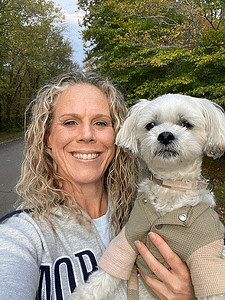
The love of my life is my dog Toby, a 15-pound AKC Shichon. Toby and I have earned titles in rally obedience, scent work, Fast CAT, jumping, agility, tricks, and fitness. We love to hike together through the national trails by the house, and go on expawditions to places like DC, NC, and even the Tetons.
I love to work out, particularly jogging, cycling, cardio kickboxing, weight lifting and yoga. I aim to hit 10,000 steps a day and keep my body moving in ways that feel good to me, especially through perimenopause.
I used to be a graphic designer in my former life. I spent 16 years in the field before transitioning my career to something I am most passionate about.
I spent my childhood wanting to be a Disney animator and believe Frozen 2 is the best Disney movie ever. My all time favorite movie is The Greatest Showman, my favorite musical is Phantom of the Opera (with Sierra Boggess), and my favorite sitcoms are The Golden Girls and Gilmore Girls.
I am a die hard Atlanta Braves fan, and my most cherished memory is the DJ playing Take Me Out to the Ball Game as my dad walked onto the dance floor while I wore my Chipper Jones jersey. I had the pleasure of meeting Paul Byrd, and received two baseballs during two separate games; one was a foul ball from Arcia and the other Eric Young (EY) handed to me.
My Approach
The Pillars for Health
1
Ascertain
The information I ascertain helps me to learn more about how I can best support you and your nutritional needs.
2
Assess
I assess, in great detail, any labs, health history, and goals to better determine your next steps.
3
Address
Using evidence-based research, I address your needs through individualized nutrition therapy, health coaching, and/or supplementation.
The very foundation of my practice centers around education. I cannot stress this enough: if you cannot put into your own words what you are struggling with, whether it is a specific disease state or specific roadblock (emotional, mental, physical, etc.), how can you possibly work towards healing? I help break down, to its most simplest form, what you need to know in order to change and grow.
Prior to our initial consult, you will be asked to complete an intake form, a medical symptoms questionnaire (MSQ), and provide a 3-day food and lifestyle journal in addition to any medical records you have.
I spend time analyzing and interpreting all of the information you provide, including lab values, family history and environmental factors, along with your specific goals.
Many factors can be causing your hormonal imbalance: poor nutrition, not getting enough sleep, high stress, over- or under-exercising, genetics, inflammation and more. My analysis will help me to identify where the potential imbalances are stemming from, which, if corrected, would improve your symptoms.
I use evidence-based research to address your needs through medical nutrition therapy, functional nutrition, health coaching, and/or supplementation. What is medical nutrition therapy? Also referred to as nutritional counseling, it is nutrition-based treatment that addresses one’s nutrition status and diagnosis.
Medical nutrition therapy includes:
- Nutrition assessment
- Nutrition diagnosis
- Nutrition intervention
- Nutrition monitoring and evaluation
The purpose of medical nutrition therapy is to restore optimal nutrition status and either slow or ameliorate associated symptoms causing imbalance. It also serves to prevent other diseases from manifesting, increases energy and activity levels, and reduce overall health care costs.